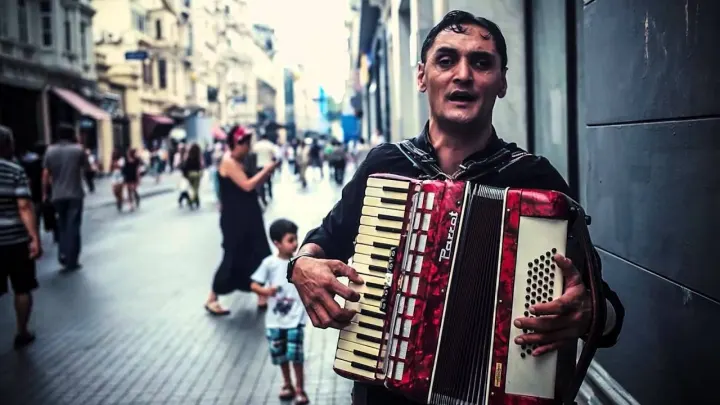
With its lively character and rich harmonies, Balkan music offers a very special kind of joy. Anyone who goes to folk dance festivals knows this music well; it could also be called a form of ethnic music. In almost every Balkan country, the catchy melodies are remarkably similar, and so is their exuberance. Balkan music also carries the influence of Rumelian Turkish music. It is one vast tapestry to which small ethnic groups have each added their own colours.
At the heart of this unique blend lies, roughly speaking, a combination of Slavic tradition, whose roots reach back to pre-Christian times, and elements from the Eastern Roman (Byzantine) and Ottoman worlds. Slavic tradition, Greek elements and Anatolian colours spanning the Ottoman and Byzantine worlds have interacted in a distinctive way to create the rich heritage we now call Balkan music.
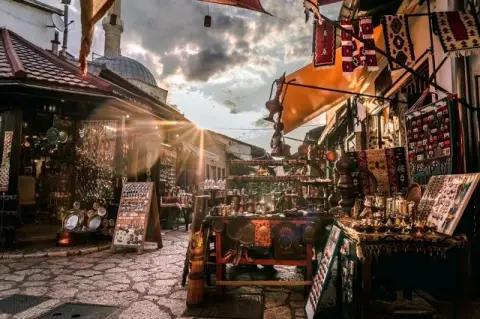
Balkan music is very close to Turkish culture. Music in the Balkans is quite different from that of the rest of Europe, because all Balkan peoples share a cultural past with the Ottoman Empire, and the most important feature of this music is its complex rhythms.
As communication has become easier, even bands in America and Northern Europe have discovered the warmth of this music, picked up their instruments and started playing Balkan folk. Bands from Bulgaria, Hungary and Macedonia are also introducing this music to the world with their own fusion of East and West.