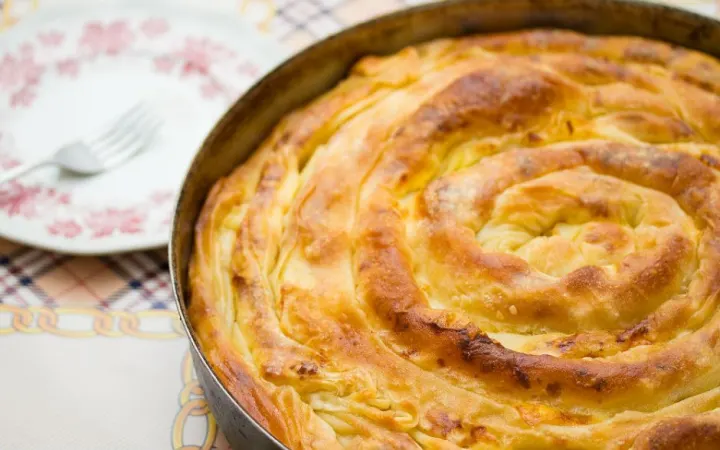
Bosnian börek, or as Bosnians themselves call it, the famous Bosnian pita… It may look simple, but it takes skill and patience; it's a pastry that mothers raising daughters pass on to them like an heirloom. Pita is what mothers-in-law pay the most attention to when it comes to their daughters-in-law. If a bride can't make a pita worth savouring, woe betide her! At family gatherings and at crowded tables full of guests, it's said that everyone would wait with bated breath to taste the pita the bride had made.
In the countries of the former Yugoslavia, pita is eaten especially on Thursday and Sunday evenings. Bosnians living in Turkey, meanwhile, treat themselves to this delicious pastry on Thursday evenings, because for Muslims, Thursday is the eve of Friday. Sunday, in turn, is sacred to Christians. Bosnians believe that flour and dough hold abundance and blessings; in honour of these blessed days, people pray for that abundance to grow and give thanks for their blessings through this deep-rooted tradition.
The filling traditionally uses spinach or leeks. In fact, the leek version has become almost a matter of national importance among Albanians and Bosnians. The pastry is rolled into long ropes and coiled in a spiral from the centre of the tray out to the edge. It is also made with cheese, potato and/or courgette fillings. Sometimes spinach and leek, or spinach and cheese, are combined to enrich the flavour or to soften a dominant taste.
In fact, many recipes bearing the name "Bosnian börek" made their way from Bosnian cuisine to Thrace. That's why the biggest debate is that everyone puts forward their own recipe, insisting, "That's not real Bosnian börek, this is how it's made…" What we've described here is the most common Bosnian börek recipe, which you might also call çarşaf böreği, or "sheet börek".